Best muscle recovery starts with understanding what your body needs after exercise. Whether you enjoy strength training, running, sports, or regular workouts, giving your muscles enough time and proper nutrition to repair is an important part of staying active. Recovery is not simply about taking a day off. It involves sleep, hydration, nutrition, movement, rest, and managing your training intensity.
What Is Muscle Recovery and Why Does It Matter?
Your muscles are stressed when you exercise. Your body repairs and adapts muscle fibers that sustain tiny injury during resistance training and other strenuous activities. You gain strength and improve your readiness for next exercises through this approach.
For this reason, recovery is crucial to any workout regimen. Repetitive high-intensity exercises of the same muscles might wear you out and impair your effectiveness if you don’t get enough rest.
The speed at which your body heals depends on a number of things. These include the kind and level of exercise you do, your training background, your diet, your level of hydration, the quality of your sleep, your stress levels, and your general way of life.

Understanding Muscle Recovery Time
Individual differences in muscle healing time can be significant. While an aggressive strength-training session may leave a certain muscle area requiring longer time before another strenuous workout, a mild workout may require very less recovery.
Additionally, because your muscles are adjusting to new movements, new exercises may result in more obvious soreness. Pay attention to how your body feels and how well you are doing rather than adhering to a set recovery regimen.
You may maintain consistency and lower your risk of extreme exhaustion by getting enough rest in between demanding sessions.
Best Muscle Recovery Strategies After Exercise
Instead of depending just on one method, the most successful recovery strategy incorporates a number of beneficial behaviors. Before subjecting highly trained muscles to another strenuous exercise, give them enough time to recover.
A well-thought-out exercise program can incorporate lighter training days in between more strenuous sessions, or it can switch muscle groups. This enables you to continue being active without subjecting your body to the same physical demands all the time.
On days of recuperation, gentle activity can sometimes be helpful. You can stay active without adding significant training load by stretching, walking, mild cycling, or doing comfortable mobility exercises.
Both eating a balanced diet and staying hydrated are crucial. After exercise, your body requires nutrition and water to maintain regular physiological functions.

Best Muscle Recovery Habits for Everyday Fitness
Simple everyday routines can have a big impact on your post-training mood. Aim for regular, high-quality sleep because during you sleep, your body carries out a number of critical repair and regulation functions.
Throughout the day, make sure to stay hydrated, especially if you exercise or perspire a lot. Consume regular, well-balanced meals that include vitamins, minerals, healthy fats, carbs, and protein.
Avoiding abrupt increases in exercise intensity is another beneficial habit. Increasing training volume gradually allows your body to adjust.
Lastly, pay attention to ongoing discomfort. Sudden or intensifying pain is not the same as normal post-exercise soreness. Exercising vigorously in spite of severe pain could exacerbate an underlying issue.
Nutrition for Muscle Repair and Recovery
After exercise, food gives your body the building blocks and energy it needs. Because it provides amino acids needed for muscle tissue maintenance and repair, protein is very crucial.
Eggs, fish, chicken, dairy products, lean meats, tofu, beans, lentils, and other foods high in protein are all good options. You can achieve your overall nutritional needs by incorporating a source of protein into your meals throughout the day.
Additionally, because they aid in replenishing the energy stores consumed during activity, carbohydrates play a significant role. A balanced post-workout meal might include whole grains, fruits, vegetables, potatoes, and other meals high in carbohydrates.
Foods high in nutrients and healthy fats should not be disregarded. Numerous nutrients that support general health can be found in nuts, seeds, avocados, olive oil, vegetables, and fruits.
Muscle Recovery Supplements: What to Know
Supplements for muscle rehabilitation may be helpful for certain individuals when they address particular nutritional demands, but they shouldn’t be used in place of a well-balanced diet.
When it’s hard to acquire enough protein from typical foods, protein powder, for instance, can offer a convenient alternative. Depending on a person’s diet and nutritional condition, other supplements can be suitable.
Nevertheless, using additional supplements does not guaranty quicker outcomes. Individual needs, dosage, product quality, and possible interactions should all be taken into account. Before beginning a new supplement, anybody managing an existing medical condition or on medication should consult a trained healthcare provider.
Sleep, Hydration, and Active Recovery
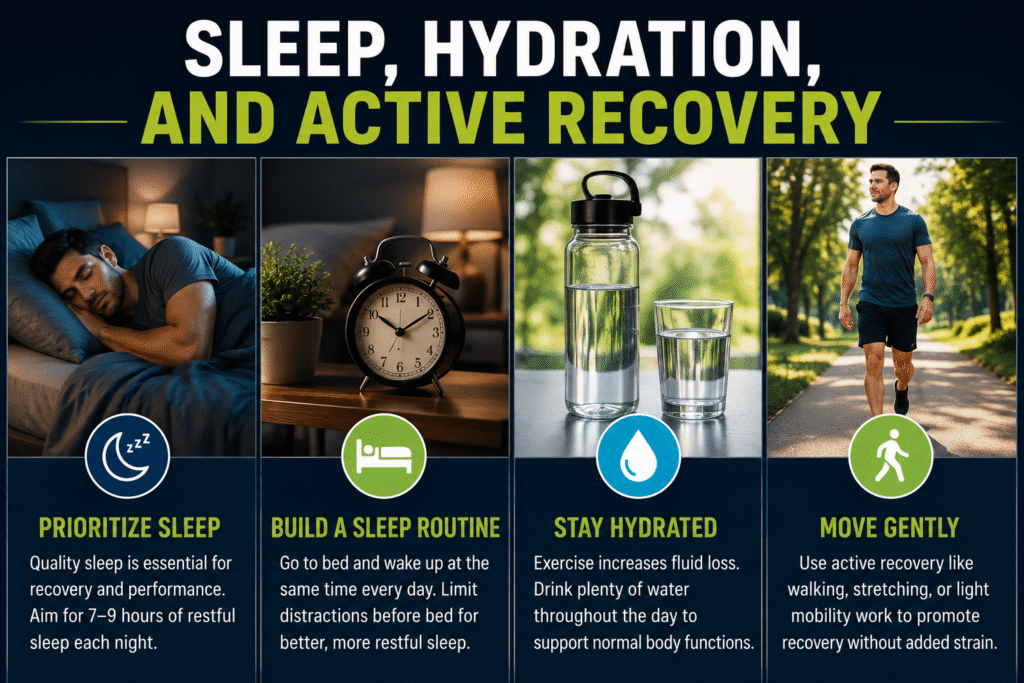
One of the most basic yet crucial aspects of physical recuperation is sleep. You may feel exhausted and find it more difficult to stick to your regular training schedule if you don’t get enough sleep.
Make an effort to stick to a regular sleep routine and set up a cozy space that encourages sound sleep. A healthy nightly habit can also be established by limiting pointless distractions before bed.
Another fundamental element is hydration. Sweating while exercise increases water loss, particularly in hot or muggy weather. Throughout the day, replenishing fluids can promote regular bodily functions.
Low-intensity exercises like walking or light mobility work can be part of active healing. Moving comfortably without converting a recuperation session into another intense workout is the aim.
Magnesium Muscle Recovery and Overall Nutrition
A necessary mineral for healthy muscle and nerve function is magnesium. Nuts, seeds, beans, whole grains, and leafy green vegetables are among the foods that contain magnesium.
Aim for a balanced diet that offers a range of vitamins and minerals rather than concentrating on just one. Consult a certified nutritionist or healthcare provider about your dietary requirements if you are worried about your magnesium consumption.
Managing Muscle Soreness After Exercise
After an unfamiliar or extremely strenuous workout, muscle discomfort may develop. DOMS, or delayed-onset muscle soreness, frequently manifests after exercise rather than during it.
If you keep up your regular daily activities and give your body enough time to heal, little soreness might go away. Your typical recuperation process can be aided by moderate exercise, enough sleep, water, and a healthy diet.
Severe discomfort, however, shouldn’t be dismissed as typical soreness from exercise. Professional assessment may be necessary if the pain is abrupt, severe, intensifying, or accompanied by other symptoms.
Muscle Soreness Recovery: Practical Approaches
If your soreness is severe, think about lowering the intensity of your next workout. It could be better to stroll gently or engage in comfortable mobility exercises rather than another strenuous session.
A muscle that is extremely painful should not be regularly trained at high intensity. Give it time to heal before doing strenuous exercise again.
You can go over your most current training as well. If significant increases in exercise volume or intensity are regularly followed by soreness, think about moving more slowly.
How to Recognize a Muscle Strain
When muscle fibers or related tissues are overextended or injured, a muscular strain may result. A strain may cause abrupt discomfort during a specific movement or exercise, in contrast to typical post-workout soreness.
Localized discomfort, swelling, bruising, weakness, or trouble moving the afflicted part normally are all potential warning indicators. Symptom severity varies.
Consider consulting a doctor if you have severe discomfort, obvious swelling, apparent weakening, or trouble utilizing the afflicted muscle. Don’t assume that every kind of pain is just a typical side effect of working out.
Common Recovery Mistakes to Avoid
One common error is to train hard every day without taking enough time to recover. When your body hasn’t had enough time to adjust, more exercise isn’t necessarily beneficial.
Neglecting sleep while concentrating mostly on exercise is another error. When people exercise frequently yet don’t eat enough calories or protein overall, nutrition can also become a problem.
Inadequate hydration, abrupt increases in training volume, and resuming intensive exercise too soon after an injury are additional behaviors to reevaluate.
Additionally, it’s critical to avoid relying solely on recuperation items or supplements. The cornerstone should continue to be a sensible exercise regimen, a healthy diet, enough sleep, adequate water, and proper rest.
Building a Sustainable Recovery Routine
Rather than being hard to stick to, a sustainable habit should fit your lifestyle. Start by determining when your muscles get enough rest by looking at your weekly exercise routine.
Make sure your meals are well-balanced and consistently incorporate items high in protein. Drink plenty of water and prioritize getting enough sleep. If it feels right, opt for pleasant exercise rather than total idleness on simpler days.
Observe your performance, level of energy, and level of soreness. You can use these insights to assess whether you should modify your training regimen.
Creating Your Personal Best Muscle Recovery Routine
Start with the fundamentals: schedule rest or easier days, organize your workouts, eat a balanced diet, stay hydrated, and sleep consistently.
Instead of making abrupt increases in training, gradually modify it as your level of fitness changes. If you frequently feel unexpected pain or have trouble recovering, you might want to talk to a skilled healthcare provider or fitness expert about your issue.
Developing a regimen that you can adhere to consistently is crucial. Instead of being seen as something apart from training, recovery should be viewed as a component of it.
Conclusion
Smart exercise, a healthy diet, proper rest, good sleep, and hydration all contribute to effective recovery. There isn’t a single tactic that works for everyone. You may promote muscle healing and continue a more regular exercise regimen by being aware of your body’s reaction and developing long-lasting habits.
Feeling better after an exercise is not the only objective of optimal muscle recovery. It is to form routines that promote your long-term fitness objectives, encourage responsible training, and keep you active.